daily orbs categories
Daily Orbs Categories Explained: Trivia, Words, Geography, Science
Learn how the daily orbs categories work, including trivia, words, geography, and science puzzles, with practical tips for solving each category.

Daily Orbs Categories Explained: Trivia, Words, Geography, Science
Daily orbs categories are the foundation of the Daily Orbs game experience. The game presents four daily knowledge challenges built around trivia, words, geography, and science. Each category uses a different topic and answer format, encouraging players to switch between different types of reasoning instead of relying on one skill alone. This guide explains how each category works, what kinds of clues players can expect, and how to build a reliable solving approach.
What are the daily orbs categories?
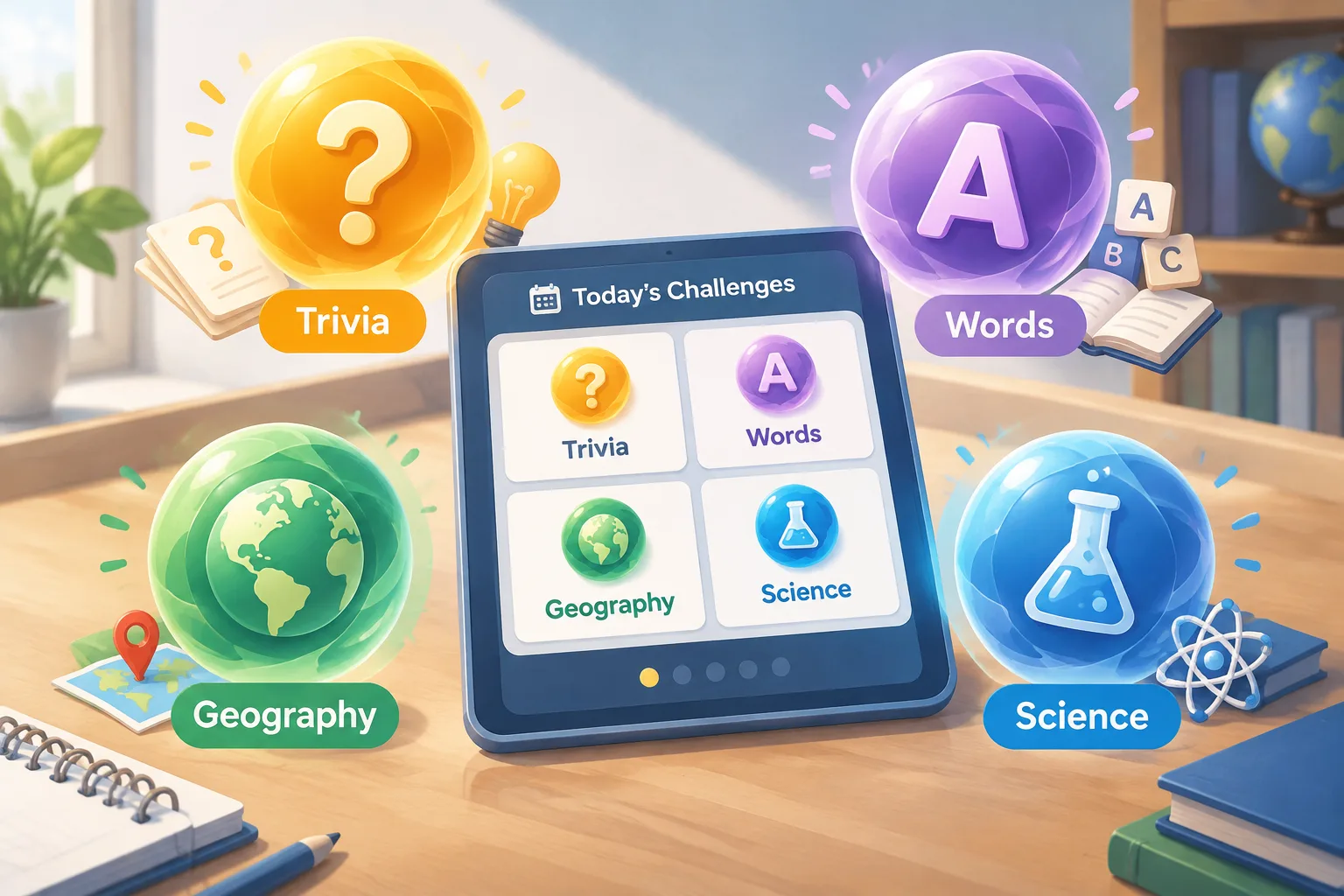
The daily orbs categories are four puzzle areas that define the daily challenge: trivia, words, geography, and science. Each category focuses on a different knowledge style, so a player may need factual recall for one orb, language skills for another, and visual or logical reasoning for a third.
Daily Orbs is designed as a short daily knowledge game. The official game description highlights four daily puzzles covering trivia, words, geography, and science. Players can explore the broader game structure through the Daily Orbs basics and learn the general flow through the how to play guide.
The four-category design creates variety. A player who struggles with one category can still enjoy the complete daily experience because the challenge is distributed across multiple subjects.
How does the Daily Orbs trivia category work?
The daily orbs trivia category focuses on general knowledge questions. These puzzles often require remembering facts, recognizing connections between topics, or identifying the most likely answer from available clues.
Trivia challenges can cover many knowledge areas. Possible topics may include history, culture, entertainment, notable events, or general facts. Because trivia draws from broad information, the best approach is usually to examine every clue rather than immediately guessing from the first familiar detail.
A useful trivia solving process:
- Read the full question or clue set before choosing an answer.
- Identify the subject area of the question.
- Remove answers that conflict with known facts.
- Use the remaining clues to confirm the final choice.
Trivia is often a category where players improve through exposure. Keeping track of unfamiliar facts from previous puzzles can make future challenges easier.
How can players approach daily orbs words puzzles?
The daily orbs words category tests language recognition and vocabulary skills. These puzzles may involve identifying words, understanding meanings, or connecting clues through language patterns.
Word puzzles reward careful attention. A clue that appears simple may contain a small distinction in meaning, spelling, or usage. Players should consider alternate interpretations instead of assuming the first possible answer is correct.
Helpful strategies for daily orbs words include:
- Look for word roots, prefixes, and familiar patterns.
- Consider synonyms and related meanings.
- Check whether the answer format limits possible solutions.
- Avoid adding extra letters or changing the clue unnecessarily.
The words category is especially useful for players who enjoy language games because it combines recall with deduction. More category explanations are available in the Daily Orbs category guides.
What makes daily orbs geography puzzles different?
The daily orbs geography category focuses on locations, places, and geographic knowledge. Geography puzzles can involve recognizing countries, regions, symbols, or other location-based information.
Geography challenges often benefit from visual reasoning. Players may need to examine details connected to flags, coats of arms, maps, or place names. Geographic knowledge is not limited to memorizing capitals; understanding regional patterns and visual identifiers can also help.
A practical geography method:
- Identify the type of geographic clue.
- Look for unique visual or naming features.
- Compare possible locations logically.
- Confirm the answer using multiple clues.
Geography knowledge grows over time because every puzzle can introduce a new place or fact. Players who enjoy exploring countries and cultures may find this category especially engaging.
How does the daily orbs science category challenge players?
The daily orbs science category uses scientific concepts and facts as its theme. These puzzles can involve areas such as biology, physics, chemistry, Earth science, or related fields.
Science questions often reward understanding rather than simple memorization. A player may solve a puzzle by knowing a fact directly, but they can also use basic scientific principles to reason toward an answer.
Useful science solving habits include:
- Identify the scientific field involved.
- Recall related concepts instead of isolated facts.
- Pay attention to units, definitions, and relationships.
- Separate common assumptions from verified information.
Science puzzles are a good reminder that curiosity is a practical game skill. Learning why an answer is correct can make similar questions easier in future Daily Orbs challenges.
Why does Daily Orbs use four different categories?
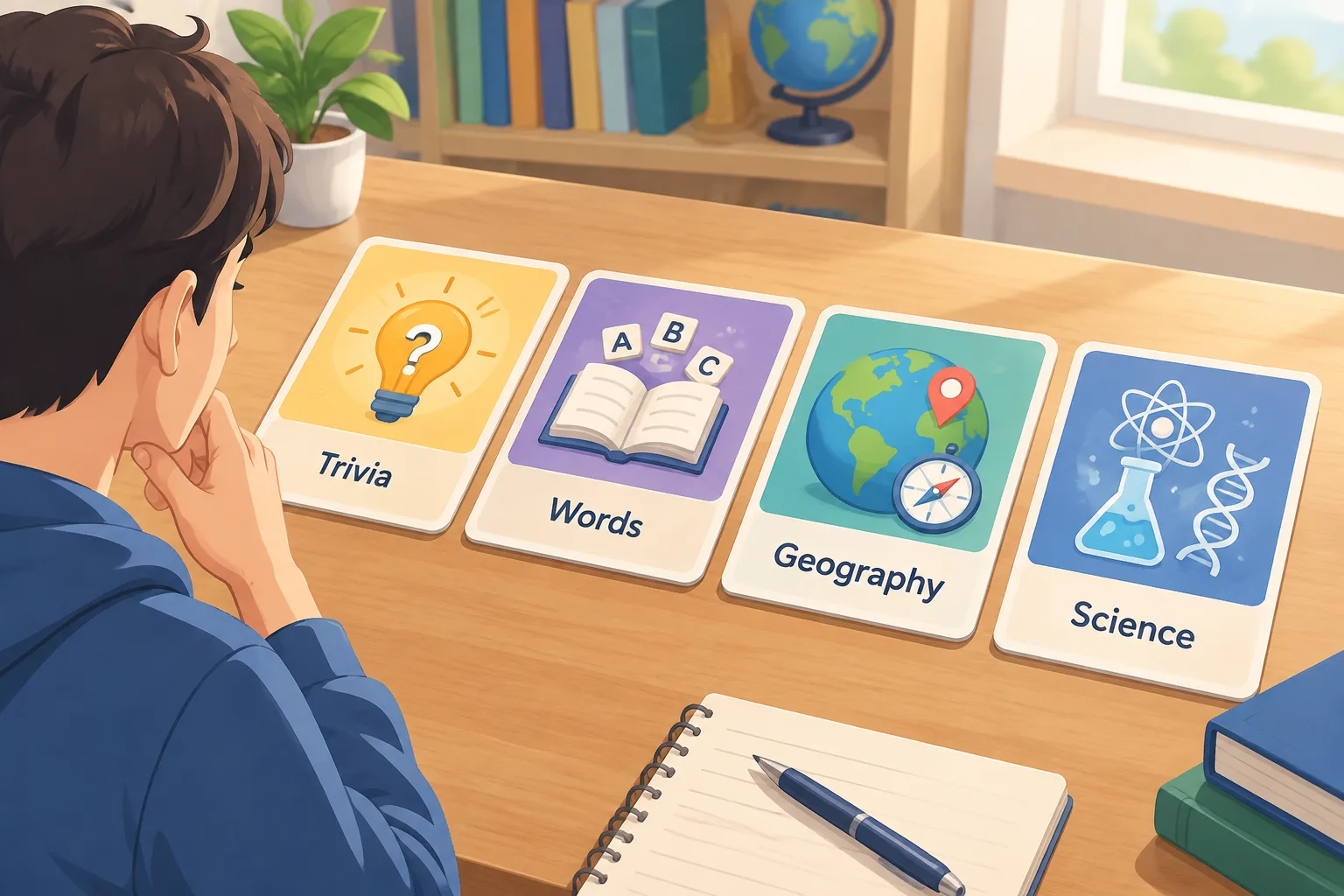
The four-category structure makes Daily Orbs different from games that focus on only one type of challenge. Trivia, words, geography, and science each test a different combination of memory, reasoning, observation, and interpretation.
This structure also creates a balanced daily routine. A player might begin with a familiar trivia question, move to a challenging word clue, solve a geography image, and finish with a science concept. The experience changes from day to day because the subjects and answer formats vary.
Players looking for daily solutions can explore the Daily Orbs answers section, while players who prefer learning the mechanics can start with how to play Daily Orbs.
Are Daily Orbs category difficulties officially ranked?
No official category difficulty ranking is provided. Some players may personally find one category easier than another depending on their interests, background knowledge, and experience.
A science enthusiast may find science puzzles comfortable, while another player may prefer words or geography. Difficulty can also change based on the specific topic selected for a particular day.
The most useful approach is to treat every category as a different skill exercise rather than assuming one category is always harder.
Frequently Asked Questions
What are the daily orbs categories?
The daily orbs categories are trivia, words, geography, and science. They represent the four main puzzle areas in the Daily Orbs game and each uses a different knowledge style.
How do daily orbs trivia puzzles work?
Daily orbs trivia puzzles test general knowledge through questions and clues. Players solve them by combining memory, elimination, and careful reading.
What skills help with daily orbs words?
Daily orbs words puzzles benefit from vocabulary knowledge, pattern recognition, and attention to different meanings of words.
Are daily orbs geography puzzles only about maps?
No. Daily orbs geography puzzles can involve different types of location-based knowledge, including visual identifiers and geographic facts.
Do daily orbs science puzzles require advanced science knowledge?
Not necessarily. Daily orbs science puzzles can often be approached through basic concepts, logical reasoning, and understanding key scientific ideas.
Final thoughts on mastering daily orbs categories
Understanding daily orbs categories helps players approach the game with the right mindset. Trivia rewards broad knowledge, words reward language skills, geography rewards observation, and science rewards curiosity and reasoning.
The best strategy is not to memorize everything. Instead, build a habit of examining clues carefully, learning from unfamiliar answers, and exploring each category as its own puzzle style. With practice, the four-category system becomes a balanced daily challenge that encourages continuous learning.