
daily orbs mistakes
Daily Orbs Common Mistakes: A Beginner Wiki Guide to Better Runs
Learn the most common Daily Orbs mistakes beginners make, why they happen, and practical ways to avoid losing hearts, missing orbs, and wasting clues.
Daily Orbs Common Mistakes: How Beginners Can Avoid Losing Hearts
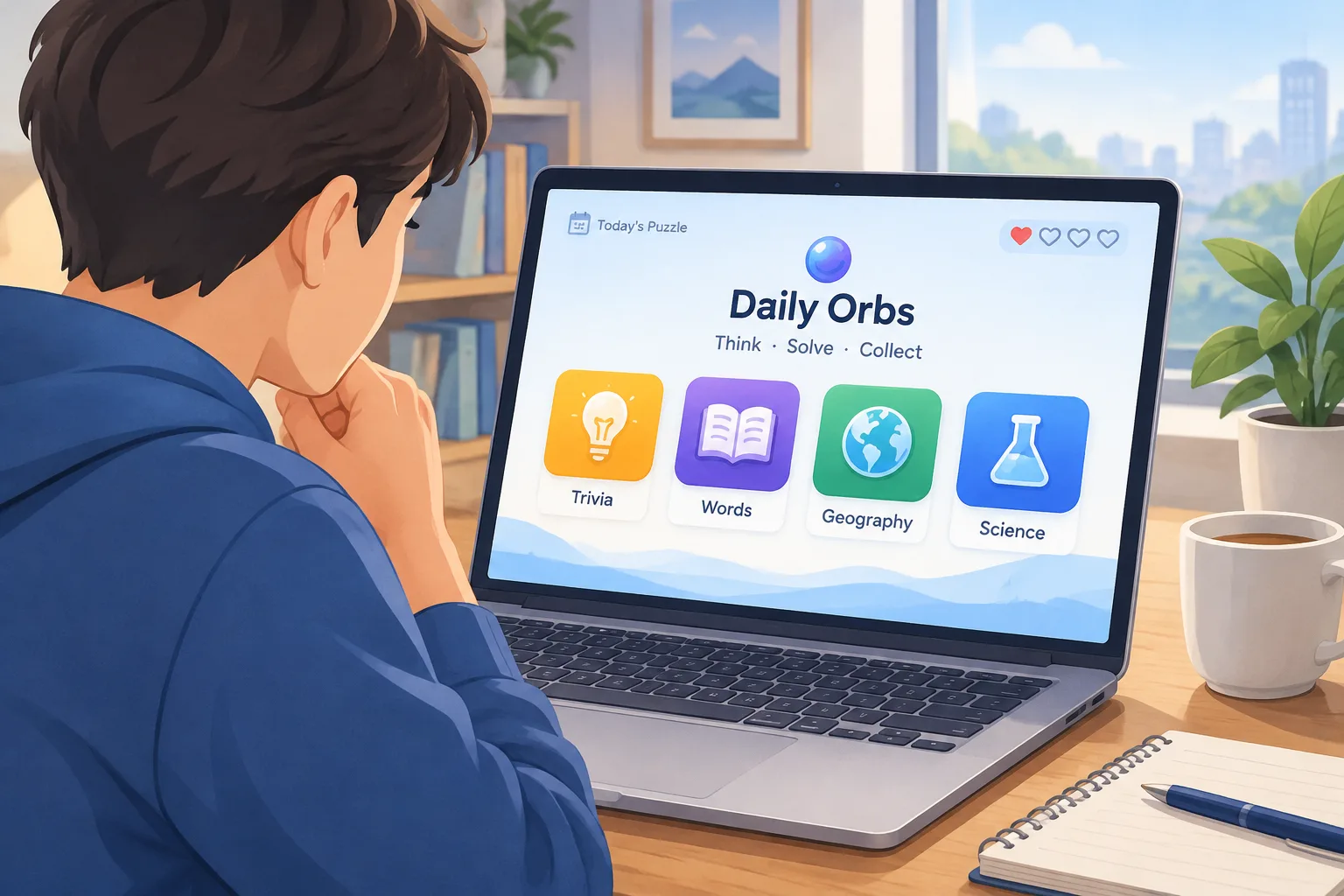
Daily Orbs common mistakes usually come from treating the game like a simple guessing challenge instead of a structured knowledge puzzle. New players often rush answers, reveal solutions too early, or approach every category with the same method. Understanding the game loop and making careful decisions can help beginners protect their hearts, collect more orbs, and build better habits.
Daily Orbs is a free browser-based daily knowledge game built around four categories: trivia, words, geography, and science. The goal is not only to know facts but also to reason through clues efficiently. This guide explains the most frequent beginner errors, the official mechanics behind them, and community-style strategies that can help you improve. For general mechanics, see the Daily Orbs basics guide and the how to play overview.
What are the most common Daily Orbs mistakes beginners make?
The most common Daily Orbs mistakes are rushing guesses, spending hearts without enough reasoning, revealing answers too early, ignoring category differences, and assuming every clue works like another puzzle game. These mistakes reduce opportunities to earn orbs because the game rewards careful solving across multiple categories.
A beginner-friendly approach starts with understanding what is verified game behavior and what is simply strategy. The official game explains mechanics such as hearts, answers, and orb collection. Advice about the best solving order or thinking process comes from player experience rather than official rules.
Many new players make the same pattern of errors:
- They guess before reading all available information.
- They use the reveal option before exhausting their own reasoning.
- They treat words, geography, trivia, and science puzzles identically.
- They forget that accepted answers may include alternate forms.
- They focus on speed instead of accuracy.
The fix for most beginners is simple: slow down, identify the category, and choose a solving method that matches the clue type.
Why do players lose hearts in Daily Orbs?
Players lose hearts in Daily Orbs because incorrect answers consume hearts. The official mechanic means careless guessing has a direct cost: after losing all available hearts, players cannot continue earning more orbs from that attempt.
One of the biggest daily orbs losing hearts problems is entering answers that are only partial guesses. A player may recognize a topic but submit an answer without checking spelling, context, or whether the clue actually supports it.
A better habit is to separate possible answers from submitted answers. Think through several possibilities first, then choose the strongest match.
Common mistake:
"I know the general idea, so I will try an answer immediately."
Better approach:
"I will list possible answers mentally, compare them with the clue, and submit only when the evidence is strong."
Community strategy suggests treating each heart as a limited resource. The official rules define the cost of wrong answers, while the decision to be more cautious is a player-created method.
For more information about solving routines, visit the Daily Orbs how-to-play resources.
Why is revealing answers too early a bad habit?
Revealing an answer too early can prevent players from completing a puzzle normally and may reduce the chance of reaching the daily orb goal. The official mechanic notes that giving up affects the ability to earn the maximum number of orbs for that puzzle.
A common beginner mistake is assuming that a reveal is harmless because it provides information. While it may help when a clue feels impossible, using it before trying reasonable approaches removes the challenge and the learning opportunity.
A practical reveal strategy is:
- Read the clue carefully.
- Identify the category.
- Try known facts first.
- Consider related concepts.
- Reveal only after genuine attempts.
This approach helps players learn recurring patterns. Over time, clues that once seemed difficult may become easier because players recognize how Daily Orbs organizes information.
How should beginners handle the four Daily Orbs categories?
Beginners should avoid using one solving style for every category because trivia, words, geography, and science require different types of reasoning. The four-category structure is a central part of the game experience, and each area benefits from a dedicated approach.

Trivia mistakes
Trivia questions often tempt players into fast guesses based on vague familiarity. A player may remember a related fact but confuse names, dates, or subjects.
A useful habit is checking the exact wording. Trivia clues often contain important details that separate a correct answer from a nearby but incorrect one.
Word puzzle mistakes
A frequent daily orbs bad habits issue is treating word clues like letter-grid games. Daily Orbs word challenges are clue and list driven rather than being the same format as popular letter guessing games.
Players should focus on meaning, relationships, and possible answer groups instead of searching for letter patterns.
Geography mistakes
Geography clues can create errors when players rely only on memory of famous locations. Beginners may overlook smaller regions, alternate names, or spelling differences.
A stronger approach is connecting clues with location relationships, such as borders, regions, landmarks, or cultural references.
Science mistakes
Science clues often require careful interpretation. Players sometimes choose an answer because it sounds scientific rather than because it matches the concept described.
Focus on the underlying principle instead of keywords alone.
More category-specific strategies are available in the Daily Orbs category guides.
What answer recognition mistakes cause failed attempts?
Answer recognition mistakes happen when players know the concept but submit an answer that does not match the expected format. Daily Orbs may accept alternate spellings or related answer forms, but players should still consider the exact clue requirements.
A common beginner error is abandoning a correct idea because the first wording they think of is slightly different. Another error is assuming every possible synonym will work.
The practical solution is to think broadly before submitting:
- Check common alternate spellings.
- Consider official names versus everyday names.
- Look for singular and plural differences.
- Review the clue context.
Players should remember that accepted-answer behavior is based on the game's answer system. Individual guesses and strategy choices remain the player's responsibility.
How can beginners build better Daily Orbs habits?
Building better habits means replacing random guessing with a repeatable process. The following routine can help new players approach each puzzle more consistently:
- Identify the category before solving.
- Read every part of the clue.
- Think of multiple possibilities.
- Use knowledge from related fields.
- Submit only strong answers.
- Review mistakes after finishing.
A mistake is useful information. If a geography clue was difficult, study the location pattern. If a science clue was confusing, review the concept. If a word clue caused trouble, consider why the wording was misleading.
Players looking for dated puzzle information can also explore the Daily Orbs answers section, while remembering that learning the reasoning process is more valuable than only seeing solutions.
What should new players remember about Daily Orbs strategy?
The most important lesson is that Daily Orbs rewards thoughtful solving rather than constant guessing. There is no need to rush every clue. A careful player who understands categories, protects hearts, and learns from previous puzzles will usually develop stronger solving habits.
The best beginner strategy is not a secret trick. It is a combination of patience, category awareness, and reviewing mistakes. Community strategies can support improvement, but the official mechanics determine how hearts, reveals, and orb collection work.
Frequently Asked Questions about daily orbs common mistakes
What are the biggest daily orbs common mistakes for new players?
The biggest mistakes are guessing too quickly, wasting hearts on uncertain answers, revealing solutions too soon, and failing to adjust strategies for different categories.
How can I avoid daily orbs losing hearts?
Avoid daily orbs losing hearts by reading clues carefully, considering multiple answers, and submitting only when the clue strongly supports your choice.
Are daily orbs tips for beginners officially provided?
The official game explains mechanics, but many daily orbs tips for beginners are community strategies based on solving approaches rather than official rules.
Why do daily orbs mistakes happen with word puzzles?
Daily orbs mistakes with word puzzles often happen because players expect a letter-grid format. Word challenges require clue interpretation and relationship thinking instead.
Can I recover from daily orbs bad habits?
Yes. Daily orbs bad habits can be improved by slowing down, reviewing previous errors, and practicing category-specific solving methods.
Should I always use hints when a clue is difficult?
Hints can be useful, but using them immediately may prevent learning. Try reasoning through the clue first and use help only when needed.
Improve your next Daily Orbs session
Ready to practice smarter solving? Explore the wiki guides for mechanics, categories, and daily puzzle information. Visit the official game at dailyorbs.com to play the current puzzle and use this guide as a reference while building better habits.